Technology
Local inputs.
Drop-in fuel.
LOA converts hydrogen and CO2 into pipeline-grade synthetic natural gas in a modular generator that deploys wherever the inputs exist. No new fuel infrastructure, no import dependence.
The numbers
The numbers, and how we got them
Lifecycle carbon intensity, calculated for fuel made from clean hydrogen and biogenic CO2.
Share of input electricity captured as hydrogen energy when on-site electrolysis supplies the hydrogen, per the electrolyzer supplier's specification.
Share of the hydrogen's energy carried through the reactor into the finished synthetic natural gas.
End-to-end electricity-to-fuel efficiency across the full chain. Heat integration recovers reaction heat and lifts it to 65%.
How it works
Three steps to secure supply
Hydrogen
Sourced locally, clean or dirty. When hydrogen is not available on site, on-site electrolysis produces it.
Methanation
Hydrogen and CO2 react inside LOA's modular generator to form synthetic natural gas: the methanation step of a power-to-gas process.
Pipeline-grade SNG
The output is synthetic natural gas, a drop-in fuel for existing pipelines, ships, and turbines.
Feedstock flexibility
Runs on what's already there
The system is feedstock-agnostic. It accepts hydrogen and CO2 from any local source, which is what lets one machine serve a port, an RNG site, an industrial plant, or a remote community.
Because every NYX 10K runs on hydrogen and CO2 already available at the host site, LOA's economics rest on locally available feedstock rather than on subsidies. Environmental incentives are upside, not a dependency.
Modularity
From one unit to a fleet
NYX 10K units stack. Capacity grows by adding machines, not redesigning plants.
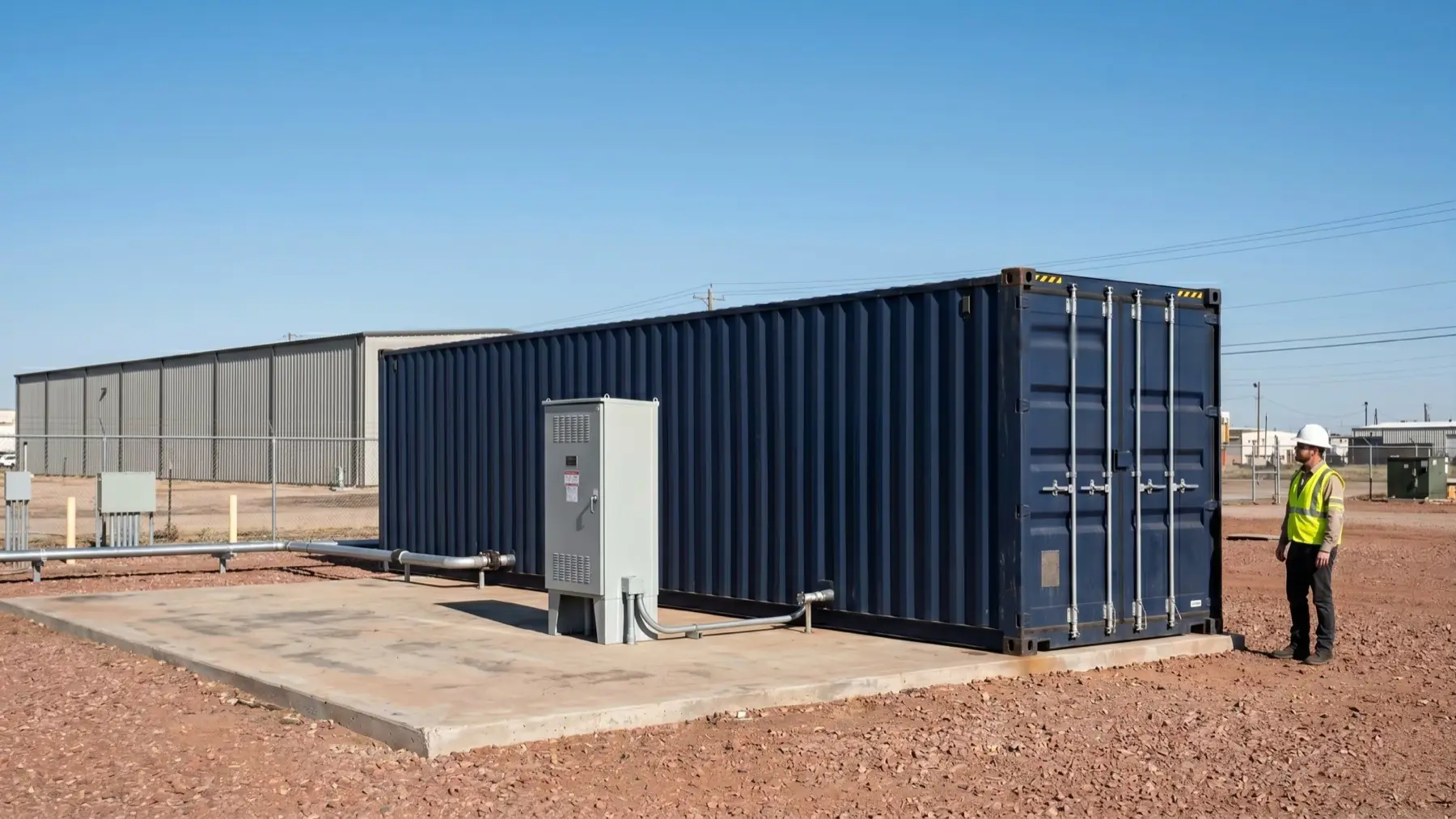
Each unit installs on existing site infrastructure without waiting in a utility interconnection queue, so once units are shipping, a deployment is measured in months, not years.